
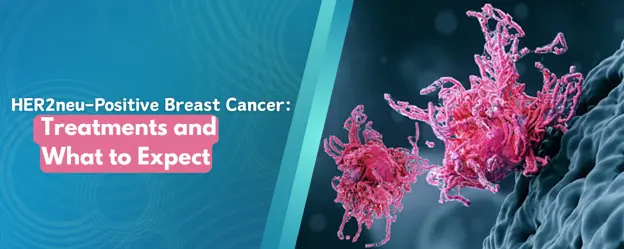
In HER2neu-positive breast cancer, the HER2neu receptor is overexpressed in the cells, which encourages cells to grow. Therefore, cancer cells multiply and grow faster than normal. This means that HER2neu-positive breast cancer is more aggressive than HER2neu-negative breast cancer.
This biological difference also gives a unique advantage, however, as there are drugs available that specifically target these proteins (HER2neu receptors) in the treatment of the disease. This precision treatment has changed the lives of patients from a high-risk diagnosis to a manageable one with excellent survival rates.
“Once one of the most difficult diagnoses, today, targeted therapies help to treat it with precision, providing hope and long-term survival to patients with HER2neu -positive breast cancer,” says Dr Garvit Chitkara, Breast Cancer Surgeon in Mumbai.
Book your consultation with Dr. Garvit Chitkara today for expert breast cancer care.
How Is HER2neu -Positive Breast Cancer Diagnosed?
Diagnosis includes clinical assessment, imaging, and specific laboratory tests.
- Biopsy: Removal of a tissue sample from the tumor.
- Immunohistochemistry (IHC): Assesses the amount of HER2neu 2 protein in cancer cells.
- Fluorescence in situ hybridization (FISH): Confirms HER2neu gene amplification.
- Other tests: A mammogram, ultrasound, or MRI can identify the size and extent of the tumor.
These tests can help confirm HER2neu status and plan treatment. It’s so important for accurate diagnosis, due to the fact that cancers are only treatable with HER2neu targeted therapies if they test positive.
Is HER2neu-Positive Breast Cancer Aggressive?
Indeed, HER2neu -positive breast cancer tends to be more aggressive and rapidly progresses compared to other breast cancers. This previously rendered treatment more difficult. However, the aggressiveness of HER2neu + cancer has now been balanced with highly effective treatment options thanks to targeted therapies.
Patients should be aware that the word aggressive doesn’t imply that the treatment is futile. In fact, the chances of surviving a HER2neu -positive cancer have significantly improved over the last 20 years, and the treatment is very effective.
Visit drgarvitchitkara.com to explore treatments, patient resources, and recovery guidance.
What to Expect During Treatment
Treatment for a HER2neu -positive breast cancer typically uses more than one method and is called multimodal treatment:
- If a targeted therapy works, drugs such as trastuzumab (Herceptin) and pertuzumab target the HER2neu receptors.
- Chemotherapy: Frequently used in combination with targeted therapy to reduce the size of the tumor.
- Surgery: Depending on the size and stage of the tumor, a lumpectomy or mastectomy may be needed.
- Radiation therapy: This is used after surgery to lower the risk of recurrence.
- Hormone therapy: If the cancer is also hormone receptor-positive, drugs such as tamoxifen can be added.
Patients can anticipate constant checking and monitoring, such as cardiac function tests, as some of the drugs used to target the HER2neu receptor may be harmful to the heart. Side effects are variable but are usually controlled with supportive care.
Targeted Therapy: The Game-Changer in HER2neu Treatment
The treatment of HER2neu -positive breast cancer has been transformed with the use of targeted therapy. Targeted drugs are different from traditional chemotherapy, which targets all cells that grow rapidly, because they target only HER2neu receptors. This precision minimizes damage to healthy cells and enhances patient outcomes.
Targeted drugs are typically those that are used for trastuzumab, pertuzumab, and newer targeted drugs such as T-DM1. These treatments are typically administered through an intravenous drip over several months and can be used for as long as 1 year, depending on the treatment plan.
Recovery & Long-Term Outlook

The outcome of the recovery will depend on how late the recovery was diagnosed and what the treatment is. Most patients can resume their normal activities after therapy, but may experience mild side effects for a few days.
The long-term forecast is much more favorable:
- The number of survivors is higher than ever.
- Targeted therapy to lower the recurrence risk.
- Health monitoring is crucial and should be regular.
- The recovery is facilitated by lifestyle changes including balanced nutrition, exercise, and stress management.
Fortunately, when HER2neu-positive breast cancer is treated and monitored properly, it can be a long and healthy life.
Request a personalized second opinion and treatment plan tailored to your unique needs.
When to consult the specialist.
You should consult a breast cancer specialist like Dr,Garvit if you:
- Check for any unusual changes, such as dimpling, discharge, or lumps in the breasts.
- Have a family history of breast cancer.
- Get a report on the biopsy that shows the presence of cancer HER2neu or otherwise
Early consultation ensures timely treatment, which is critical for better outcomes.
FAQs
Q1. Can HER2neu -positive breast cancer be cured?
While “cure” is a complex term in oncology, many patients achieve long-term remission with modern therapies.
Q2. What are common side effects of HER2neu -targeted therapy?
Fatigue, mild digestive issues, and heart function changes are possible but manageable.
Q3. Is HER2neu -positive breast cancer hereditary?
HER2neu status itself is not inherited, but family history may increase overall risk.
Q4. How long does HER2neu treatment last?
Targeted therapy is usually given for 6–12 months, depending on stage and response.
Q5. Can HER2neu -positive patients live a normal life?
Yes. With proper treatment and follow-up, many patients live healthy, fulfilling lives.