
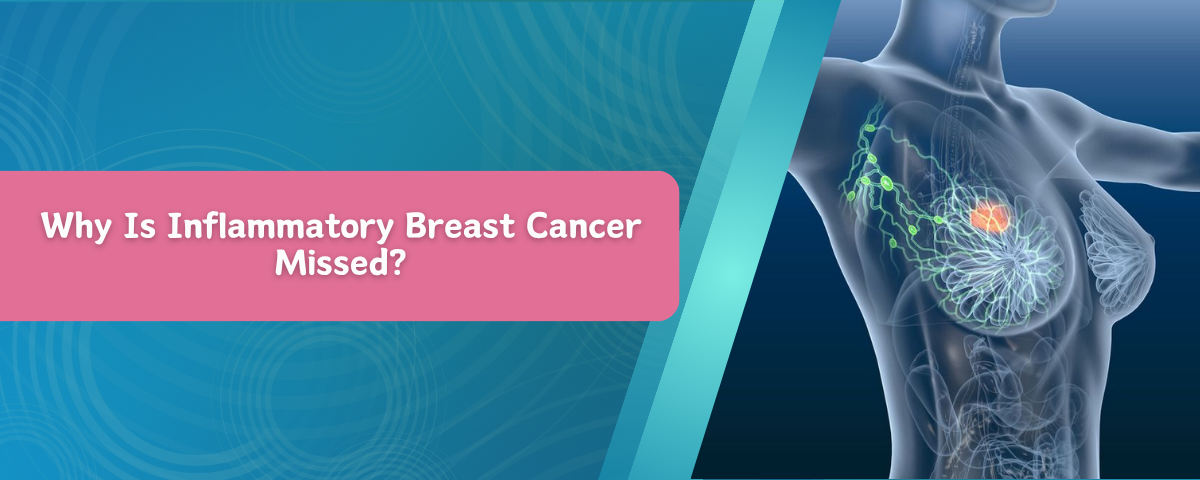
Inflammatory breast cancer is one of the most dangerous forms of breast cancer, not because it is the most common, but because it is the most consistently misdiagnosed. It does not usually present with a lump. It presents with redness, swelling, warmth, and skin changes that look almost identical to a breast infection. Women are treated for mastitis for weeks before anyone considers cancer. By the time the correct diagnosis is made, the disease has often progressed significantly. Understanding why this happens is the first step toward not letting it happen.
According to Dr. Garvit Chitkara, a trusted Breast Cancer Surgeon in Mumbai,
“Inflammatory breast cancer is missed because it breaks every rule women are taught about what cancer looks like. There is no lump to feel. The breast is red, swollen, and painful, so it gets treated as an infection.”
Why does inflammatory breast cancer go undetected?
Several factors work together to make this cancer consistently harder to catch than other breast cancers:
- No palpable lump: Most breast cancer awareness focuses on finding a lump. Inflammatory breast cancer spreads through the lymphatic channels of the skin rather than forming a discrete mass, so there is often nothing to feel. Women who do monthly self-examinations and find nothing may still have IBC.
- Mimics mastitis perfectly: The redness, warmth, swelling, and tenderness of IBC are indistinguishable from a breast infection on clinical examination alone. Most doctors including experienced GPs will treat it as mastitis first. This is not negligence. It is the expected first response to these symptoms.
- Mammograms frequently miss it: Because IBC does not form a distinct tumour, mammography often appears normal or shows only generalised density changes. A normal mammogram in the context of these symptoms should not be falsely reassuring. Skin thickening on imaging is the more telling sign.
- Rapid progression creates a narrow window: IBC is one of the fastest-growing breast cancers. The window between the onset of symptoms and locally advanced disease is weeks, not months. Every round of antibiotics that does not work is time the cancer is using to spread.
When standard treatments for infection fail, and symptoms persist, the next step is not a second course of antibiotics. It is a skin punch biopsy, which is the definitive diagnostic test for IBC, alongside imaging and urgent specialist review. Anyone in this situation should not delay seeking a breast cancer surgery consultation.
What are the signs of inflammatory breast cancer to watch for?
Recognising IBC requires knowing what distinguishes it from a straightforward infection:
- Rapid onset of breast swelling: The affected breast increases in size quickly, often over days to weeks. One breast becomes noticeably larger than the other without a clear reason, such as injury or breastfeeding.
- Skin changes resembling orange peel: The skin develops a pitted, dimpled texture known as peau d’orange, caused by cancer cells blocking the lymphatic vessels just beneath the skin. This is a hallmark sign of IBC and should never be dismissed.
- Persistent redness covering a third or more of the breast: Unlike localised redness from a minor infection, IBC causes redness that spreads across a significant portion of the breast surface and does not settle with antibiotics.
- Nipple changes: The nipple may become flattened, inverted, or retracted. This can happen alongside the skin changes or independently, and in either case warrants immediate specialist review.
Because IBC often presents at an already advanced stage, understanding the warning signs of spread is equally important. Reading about metastatic symptoms helps women understand what to watch for if IBC is suspected or has been diagnosed.
Why Choose Dr Garvit Chitkara ?
Dr. Garvit Chitkara is Associate Director of Breast Surgical Oncology and Oncoplasty at Nanavati Max Institute of Cancer Care, Mumbai, with over 17 years of experience in breast surgical oncology. He has authored and presented research on inflammatory and locally advanced breast cancer, and brings a multidisciplinary approach to cases that require urgent, coordinated management across surgery, oncology, and imaging. Patients presenting with persistent breast symptoms that have not responded to standard treatment are seen promptly and worked up without delay.
FAQ
How is inflammatory breast cancer diagnosed?
Diagnosis requires a skin punch biopsy of the affected breast tissue, combined with imaging, including mammogram, ultrasound, and MRI, where indicated. Blood tests and staging scans are done once the diagnosis is confirmed.
Is inflammatory breast cancer always stage 3 or 4?
By definition, IBC is classified as at least stage 3B at diagnosis due to skin involvement. Metastatic spread makes it stage 4. This staging reflects the extent of disease at presentation, not the prognosis after treatment.
Can inflammatory breast cancer be treated successfully?
Yes, though treatment is more complex than for early-stage breast cancer. It typically involves chemotherapy first to shrink the disease, followed by surgery and then radiation. Outcomes have improved significantly with modern multimodal treatment.
How quickly does inflammatory breast cancer progress?
IBC is one of the most aggressive breast cancers and can progress from early symptoms to locally advanced disease within weeks. This is why any breast infection that does not respond to antibiotics within one to two weeks must be investigated further without delay.