
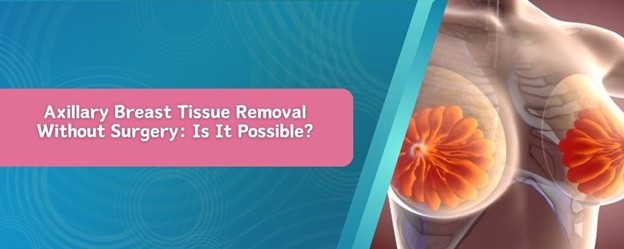
Axillary breast tissue, also known as accessory breast tissue, is extra breast tissue that develops in the underarm (axillary) region. It occurs due to incomplete regression of the embryonic milk line and may present as a soft swelling or lump near the armpit. In some individuals, it remains unnoticed, while in others it can become more prominent during hormonal changes such as puberty, pregnancy, or menstruation.
Although this condition is usually benign, it can sometimes lead to discomfort, tenderness, or cosmetic concerns, especially when the swelling becomes more visible or symptomatic. Many patients seek medical guidance to understand whether this condition can be managed without surgery and what the most appropriate treatment options are based on their symptoms and tissue type.
Dr. Garvit Chitkara, breast cancer surgeon in Mumbai, explains:
“Axillary breast tissue is a common and often harmless condition, but it should not be ignored if there are changes in size, pain, or discomfort. A proper clinical evaluation helps determine whether conservative management is sufficient or if further treatment is required.”
Can Axillary Breast Tissue Be Removed Without Surgery?

The possibility of removing axillary breast tissue without surgery depends on the type of tissue present. In many cases, this tissue contains a combination of fat and glandular components.
Non-surgical approaches may help reduce fat in the area, but glandular tissue typically does not disappear without medical intervention. This means that while the appearance may improve slightly, complete removal is usually not possible without surgery.
According to Dr. Garvit Chitkara, breast cancer surgeon in Mumbai, a proper diagnosis is crucial when evaluating axillary swelling, as it helps determine the type of tissue involved and the most suitable treatment option.
Non-Surgical Options for Axillary Breast Tissue
Weight Management and Diet
Maintaining a healthy weight can reduce fat deposits in the axillary region, making the swelling less noticeable.
Exercise and Upper Body Strengthening
Regular physical activity, especially upper-body exercises, may improve muscle tone and overall body contour.
Supportive or Compression Garments
Wearing well-fitted undergarments can help minimize the visible bulge and provide better support.
Hormonal Regulation
However, these methods mainly target fat and do not eliminate glandular breast tissue completely.
Who May Benefit from Non-Surgical Management?

Non-surgical management may be suitable for individuals who:
- Have mild swelling with predominantly fatty tissue
- Experience minimal or no pain
- Are not significantly bothered by cosmetic appearance
- Prefer conservative management over surgical intervention
For such patients, lifestyle changes may help improve symptoms without the need for invasive procedures.
However, if symptoms persist or worsen, further evaluation is recommended. You can also explore more about breast health in our article on Six Steps of Breast Self-Examination
Limitations of Non-Surgical Treatment
While non-surgical methods can offer some improvement, they have certain limitations.
- They cannot remove glandular breast tissue
- Results may be temporary or minimal
- Symptoms such as pain or swelling may persist
- Cosmetic concerns may not be fully addressed
Because of these limitations, some patients may eventually consider surgical treatment for a more definitive solution.
Patients undergoing other breast-related treatments can also understand side effects in our guide on breast cancer chemotherapy side effects.
When Should Axillary Swelling Be Evaluated?
Any swelling or lump in the underarm area should be evaluated by a specialist, especially if it shows unusual characteristics.
You should seek medical attention if you notice:
- A new or rapidly growing lump
- Persistent pain or tenderness
- Changes in size, shape, or consistency
- Skin changes such as redness or thickening
- Discomfort interfering with daily activities
What Results Can Be Expected?
The results of treatment depend on the method chosen and the type of tissue present.
- Non-surgical methods may provide mild improvement in appearance
- Surgical treatment offers more definitive and long-lasting results
- Cosmetic outcomes are generally favorable when treated by an experienced specialist
Patients can expect better comfort, improved contour, and relief from symptoms with appropriate treatment.
Recovery & Downtime
Recovery depends on the type of treatment.
- Non-surgical methods require no downtime
- Surgical procedures typically involve a short recovery period
- Most patients can return to normal activities within a few days to weeks
Following post-treatment care instructions is essential for optimal healing and results.
FAQ
1. Can axillary breast tissue be removed without surgery?
Most cases of axillary breast tissue, especially those containing glandular tissue, cannot be completely removed without surgery. Non-surgical methods may reduce fat but not eliminate the tissue entirely.
2. Is axillary breast tissue removal painful?
The procedure is usually performed under anesthesia, so patients do not feel pain during surgery. Mild discomfort or soreness may occur during recovery, which is manageable with medication.
3. How long does it take to recover after axillary breast tissue removal?
Recovery time is generally short. Most patients can return to normal activities within a few days, while complete healing may take a few weeks.
4. Is axillary breast tissue dangerous or cancerous?
Axillary breast tissue is usually benign. However, since it is similar to normal breast tissue, it can develop the same conditions, including rare cases of cancer, so evaluation is important.
5. When should I see a doctor for axillary breast tissue?
You should consult a doctor if you notice a new lump, rapid growth, persistent pain, or any unusual changes in the underarm area.