

Breast Cancer Surgery in Mumbai
Breast cancer is the most common type of cancer in women. In India, about 122,000 women are diagnosed with breast cancer every year. Although the disease is widespread, many women do not know about it until it is too late.
Because breast cancer commonly shows signs and symptoms, it is important to pay attention to your body and notice any unexpected indicators. Your symptoms could be caused by something other than cancer. Therefore, the only way to be sure is to consult your doctor.

Breast cancer is the most common type of cancer in women. In India, about 122,000 women are diagnosed with breast cancer every year. Although the disease is widespread, many women do not know about it until it is too late.
Because breast cancer commonly shows signs and symptoms, it is important to pay attention to your body and notice any unexpected indicators. Your symptoms could be caused by something other than cancer. Therefore, the only way to be sure is to consult your doctor.
Who Needs Lumpectomy Surgery?
Lumpectomy is usually recommended for patients who meet specific medical criteria. It is commonly advised as part of breast cancer surgery for patients diagnosed at an early stage. Suitable candidates typically include:
- Patients with early-stage breast cancer (Stage 0, I, or II)
- Tumors that are small relative to breast size
- A single tumor confined to one area of the breast
- Patients with no prior radiation therapy to the affected breast
- Those who are fit to undergo radiation therapy after surgery
- Selected cases where diagnosis confirms localized or non-aggressive disease
Many patients considering breast cancer surgery may be eligible for lumpectomy after proper imaging and biopsy results. A thorough evaluation by a breast cancer surgeon is essential to determine eligibility and ensure the safest and most effective treatment plan.
Book your consultation today to discuss lumpectomy surgery with an expert breast cancer surgeon.
Types of Lumpectomy Procedures
1. Standard Lumpectomy
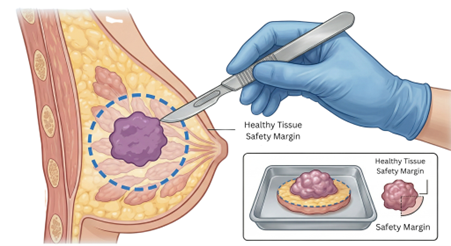
The goal of a standard lumpectomy is to remove the primary tumor along with a “clear margin” of surrounding healthy tissue. This margin is crucial because it ensures that no microscopic cancer cells are left behind at the site.
- Process: The surgeon makes an incision directly over or near the lump and removes the mass in one piece.
- Suitability: Best for larger breasts or smaller tumors where the removal of tissue won’t significantly alter the breast’s shape.
Oncoplastic Lumpectomy
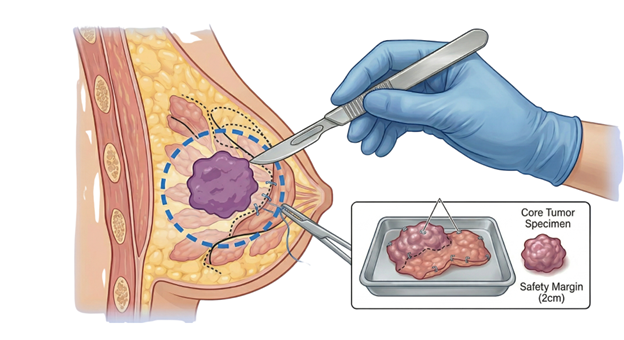
This is a sophisticated approach that marries oncology (cancer removal) with plastic surgery (reconstruction). Instead of simply removing the lump and closing the skin, the surgeon rearranges the remaining breast tissue to fill the “void” left by the tumor.
- Techniques: May involve a breast lift (mastopexy) or reduction techniques during the same surgery.
- Benefits: Prevents the “dimpling” or “divot” effect that can occur after a large amount of tissue is removed. It ensures the breast maintains a natural contour and symmetry with the other side.
Image-Guided Lumpectomy
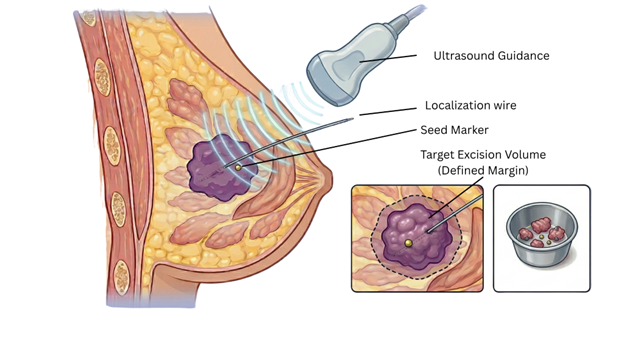
In many early-detection cases, a tumor may be too small to be felt by hand (non-palpable). In these instances, surgeons use advanced imaging to pinpoint the exact location of the abnormal tissue.
- Localization Methods:
- Wire Localization: A thin wire is placed into the tumor under ultrasound or mammography guidance on the morning of surgery.
- Radioactive or Magnetic Seeds: A tiny “seed” (the size of a grain of rice) is placed days before surgery. The surgeon uses a handheld probe in the OR to find the seed and the tumor.
- Benefits: Minimizes the amount of healthy tissue removed because the surgeon knows exactly where the tumor starts and ends.
Benefits of Lumpectomy Surgery
Lumpectomy offers both medical and psychological advantages:
Preserves most of the breast tissue
Shorter surgery and recovery time compared to a mastectomy
Equivalent survival rates in early-stage cancer (when combined with radiation)
Better body image and emotional outcomes
Lower surgical morbidity
This is why many patients opt for lumpectomy surgery in Mumbai when clinically appropriate.
Clinical studies have shown that survival rates are similar in early-stage breast cancer for both procedures when treatment protocols are followed.
“The goal is not just removing cancer, but doing so in a way that supports long-term physical and emotional well-being. Lumpectomy allows us to achieve both in selected patients.”
- Garvit Chitkara, Breast Cancer Surgeon in Mumbai
How is Lumpectomy performed
Lumpectomy surgery is performed in a hospital under sterile conditions using general anesthesia.
Step-by-Step Procedure
- Preoperative Planning
Imaging is reviewed to locate the tumor. In some cases, localization markers are placed before surgery.
- Anesthesia
General anesthesia ensures the patient remains pain-free during the procedure.
- Tumor Removal
The surgeon removes:
- Tumor
- Surrounding margin of normal tissue
In selected cases, sentinel lymph node biopsy may also be performed to check cancer spread.
- Tissue Examination
The removed tissue is sent for pathological analysis to confirm tumor margins.
- Closure
The incision is closed using cosmetic techniques to maintain breast contour.
The entire procedure typically takes 1 to 2 hours, depending on tumor complexity.
Contact us today to find out if lumpectomy is the right treatment for you.
Recovery and Aftercare
Recovery after lumpectomy surgery in Mumbai is generally smooth, with most patients returning home the same day or within 24 hours.
Typical Recovery Timeline:
Hospital Stay: Same day or overnight
Mild swelling and bruising: 1–2 weeks
Tenderness
Return to normal activities: 5–7 days
Complete healing: 2–4 weeks
Radiation therapy: Usually begins after healing
Aftercare Instructions:
Keep incision clean and dry
Take prescribed medications
Avoid heavy lifting for 2–3 weeks
Attend scheduled follow-up visits
Radiation therapy is commonly recommended after lumpectomy to reduce the risk of cancer recurrence.
Radiation therapy is commonly recommended after lumpectomy to reduce the risk of cancer recurrence.
Why Choose Dr. Garvit Chitkara?
Choosing the right surgeon is critical for both cancer treatment and cosmetic outcomes.
Dr. Garvit Chitkara is a dedicated breast oncologist in Mumbai known for providing evidence-based surgical care for breast diseases.
Specialized Breast Surgery Focus
Dedicated experience in breast cancer and breast-conserving procedures.
Individualized Treatment Planning
Each patient receives a personalized surgical approach.

Advanced Surgical Techniques
Use of modern localization and oncoplastic techniques.
Multidisciplinary Care
Coordination with oncologists, radiologists, and pathologists.
Patient-Centered Approach
Focus on safety, recovery, and long-term outcomes.
Frequently Asked Questions
Is lumpectomy safe?
Yes, lumpectomy is a well-established and safe procedure when performed by an experienced breast cancer surgeon in Mumbai.
How long does lumpectomy surgery take?
The procedure typically takes 1 to 2 hours, depending on tumor size and whether lymph node biopsy is performed.
Will I need radiation after lumpectomy?
In most cases, yes. Radiation therapy significantly reduces the risk of recurrence.
Is lumpectomy better than mastectomy?
Not necessarily better, but equally effective in early-stage cancer when combined with radiation. The choice depends on individual clinical factors.
What precautions do you need to take post surgery to avoid lymphedema?
- Avoid injury to the operated side arm. It’s easier said than done as patients where the dominant hand side is operated are likely to have small cuts and bruise while doing their daily works. These cuts and bruises tend to increase the rate of infection and lymphedema
- Although the scientific evidence supporting it is less but its advised to not use the operated side hand for blood tests or even BP measurement as the pressure applied can dmage the superficial lymphatics thereby increasing lymphedema
- See your doctor if you notice any change in size/ girth of the arm